

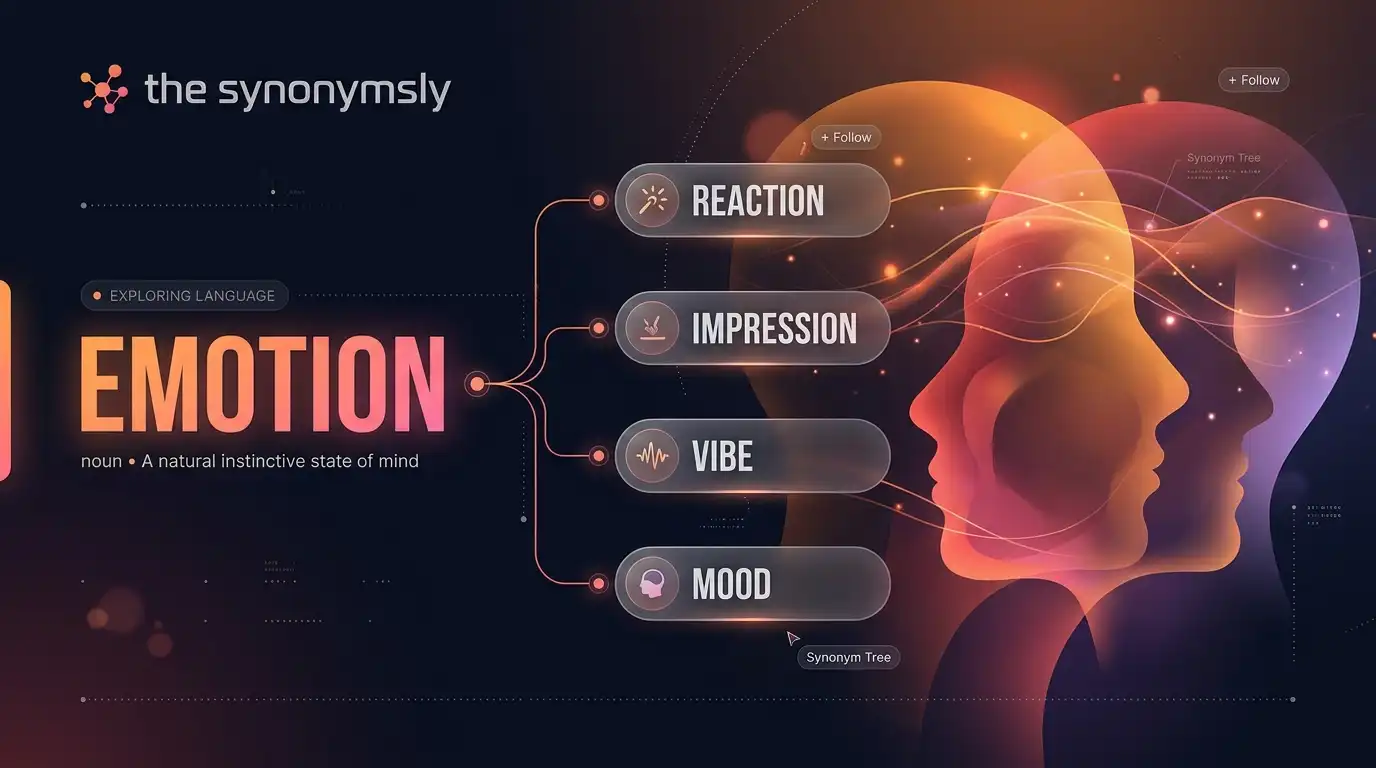
Emotion means a feeling you have in your heart or mind.
Imagine watching a sad film or hearing a happy song. You may feel joy, fear, love, or sadness. Each of these is an emotion. When writing about feelings, using the same word again and again can make your sentences sound dull. Learning emotion synonyms helps you describe feelings in a clear and interesting way. Some words show happiness, while others express anger, fear, or surprise. This guide shares useful alternatives, simple meanings, and examples for students, English learners, bloggers, and everyday writers.
Understanding Emotion Synonyms
Simple meaning: An emotion is a feeling that a person has in response to a thought, event, person, or situation. Emotions can be pleasant, unpleasant, or mixed.
Part of speech: Emotion is a noun. Its plural form is emotions.
Example in context: Joy was the strongest emotion she felt after hearing the good news.
Common types of emotion include:
- Happy feelings: Joy, love, hope, and excitement.
- Sad feelings: Grief, sorrow, and disappointment.
- Strong or difficult feelings: Anger, fear, worry, and frustration.
- Mixed feelings: Surprise, confusion, and nervous excitement.
Best Alternatives to Emotion Synonyms
| Alternative | Simple meaning | Best use |
| Feeling | A state you notice in your mind or body | Everyday speech |
| Sentiment | A thought or feeling about something | Writing and formal speech |
| Mood | The way someone feels for a time | Daily life |
| Passion | A very strong feeling or interest | Personal goals and interests |
| Affection | A warm feeling of love or care | Family and friendships |
| Reaction | A feeling or response to something | Events and news |
| Response | The way someone reacts to an event | General writing |
| State of mind | The way a person feels or thinks | Personal feelings |
| Temperament | A person’s usual way of feeling and acting | Personality |
| Sensation | A feeling noticed in the body | Physical experiences |
| Attachment | A strong feeling of care or connection | People and relationships |
| Excitement | A strong feeling of joy or interest | Special events |
Synonyms of Emotion by Situation
Everyday Words for Feelings
These words are simple and common. They are useful when talking about how you or another person feels.
Feeling — A state of mind or body that you notice.
Example: I had a strange feeling before the test.
Mood — The way someone feels at a certain time.
Example: Her mood changed after she heard the good news.
Sentiment — A feeling or opinion about a person, event, or idea.
Example: He shared a kind sentiment in his birthday card.
State of mind — The way a person feels or thinks at a certain time.
Example: A quiet walk helped improve my state of mind.
Frame of mind — A person’s current way of thinking or feeling.
Example: She was in a good frame of mind before the match.
Reaction — A feeling or action that happens because of something.
Example: His reaction to the surprise was full of joy.
Response — The way someone feels or acts after something happens.
Example: The news brought a strong response from the crowd.
Inner feeling — A feeling that a person keeps inside.
Example: She could not explain her inner feeling of sadness.
Words for Strong Feelings
Some feelings are much stronger than others. These words help describe deep love, anger, joy, or interest.
Passion — A strong feeling of love or interest in something.
Example: His passion for music began when he was young.
Intensity — The strength of a feeling.
Example: The intensity of her joy surprised everyone.
Fervor — A strong feeling of excitement or belief.
Example: The fans cheered with great fervor.
Enthusiasm — A strong and happy interest in an activity.
Example: The children showed enthusiasm during the art class.
Zeal — Great energy and interest in doing something.
Example: She worked with zeal to finish the project.
Affection — A warm feeling of love or care.
Example: The child showed affection for her grandmother.
Devotion — Deep love, care, or loyalty.
Example: His devotion to his family was clear.
Desire — A strong wish to have or do something.
Example: She had a strong desire to learn English.

Words for Love and Warm Feelings
These words describe care, closeness, and kindness. They are useful when writing about family, friends, partners, and people who matter to you.
Love — A deep feeling of care for someone or something.
Example: A mother’s love can bring comfort to a child.
Fondness — A warm and gentle liking for someone or something.
Example: He has a fondness for old books.
Warmth — A kind and friendly feeling toward someone.
Example: Her warmth made the new student feel welcome.
Tenderness — Gentle love and care.
Example: The father held his baby with tenderness.
Compassion — A feeling of care for someone who is hurt or in trouble.
Example: The nurse showed compassion to every patient.
Empathy — The ability to understand how another person feels.
Example: Good friends show empathy when someone is sad.
Attachment — A strong feeling of love or connection.
Example: The child had a close attachment to her pet dog.
Admiration — A feeling of respect and liking for someone.
Example: I have great admiration for my teacher.
Words for Sad and Difficult Feelings
Not all feelings are happy. These words help describe pain, worry, anger, and sadness in a clear way.
Sorrow — A deep feeling of sadness.
Example: The family felt sorrow after the loss.
Grief — Deep sadness after someone dies or a great loss happens.
Example: She needed time to deal with her grief.
Anger — A strong feeling of being upset or annoyed.
Example: He felt anger when someone broke his bike.
Fear — A feeling of worry about danger or harm.
Example: The loud noise filled the child with fear.
Anxiety — A feeling of worry or nervousness.
Example: She felt anxiety before speaking in front of the class.
Frustration — A feeling of upset when something is hard or does not go as planned.
Example: He showed frustration when the computer stopped working.
Disappointment — A sad feeling when something does not happen as hoped.
Example: There was disappointment when the match was canceled.
Loneliness — A sad feeling caused by being alone or feeling left out.
Example: Moving to a new town made him feel loneliness.
Words for Positive and Mixed Feelings
Some feelings are not easy to place in one group. These words describe hope, surprise, calm, and interest.
Joy — A strong feeling of happiness.
Example: Her face showed joy when she saw her family.
Delight — Great happiness caused by something nice.
Example: The gift brought delight to the little girl.
Hope — A feeling that something good may happen.
Example: He had hope that his team would win.
Relief — A good feeling when worry or trouble ends.
Example: She felt relief after finding her lost phone.
Surprise — A feeling caused by something you did not expect.
Example: His visit was a happy surprise.
Wonder — A feeling of interest and amazement.
Example: The child looked at the stars with wonder.
Curiosity — A strong wish to learn or know something.
Example: Her curiosity led her to read more books.
Calm — A peaceful feeling without worry or anger.
Example: Soft music gave him a sense of calm.
Words Similar to Emotion Synonyms but with Different Meanings
Some words are linked to feelings but have a more specific meaning. They may work in certain sentences, but they are not exact replacements for emotion.
Mood vs. Emotion
Mood: A feeling or state that can last for a short or long time.
Difference: An emotion is often linked to a clear event or thought. A mood may last longer and may not have one clear cause.
Example: She was in a cheerful mood all morning.
Sentiment vs. Emotion
Sentiment: A feeling or view about a person, event, or idea.
Difference: Sentiment often describes a shared or expressed feeling. Emotion can describe any personal feeling.
Example: The letter shared a warm sentiment about friendship.
Passion vs. Emotion
Passion: A very strong feeling or interest.
Difference: Passion is usually stronger and may last a long time. Emotion is a wider word for many kinds of feelings.
Example: His passion for football led him to join a local team.
Temperament vs. Emotion
Temperament: A person’s usual way of feeling and acting.
Difference: Temperament describes a person’s general nature. An emotion is a feeling at a certain time.
Example: Her calm temperament helped her deal with stress.
Sensation vs. Emotion
Sensation: A feeling that you notice through your body or senses.
Difference: A sensation may be physical, such as heat or pain. An emotion is a feeling such as joy, fear, or anger.
Example: He felt a burning sensation in his hand.
Instinct vs. Emotion
Instinct: A natural response that happens without careful thought.
Difference: An instinct is not the same as a feeling, though it can happen with one.
Example: Her instinct was to protect the small child.
How to Choose the Right Synonym
The right word depends on the kind of feeling you want to describe. These examples show how word choice can change the meaning of a sentence.
Original: She showed a strong emotion when she saw the gift.
Option 1: She showed great joy when she saw the gift.
Option 2: She showed deep surprise when she saw the gift.
What changes: Joy shows happiness, while surprise shows that she did not expect the gift.
Original: His emotion was clear during the sad film.
Option 1: His sadness was clear during the sad film.
Option 2: His grief was clear during the sad film.
What changes: Sadness is a general feeling, while grief often means deep pain after a loss.
Original: She could not hide her emotion before the match.
Option 1: She could not hide her excitement before the match.
Option 2: She could not hide her anxiety before the match.
What changes: Excitement shows happy energy, while anxiety shows worry.
Original: The teacher understood the emotion of the student.
Option 1: The teacher understood the student’s feelings.
Option 2: The teacher understood the student’s mood.
What changes: Feelings can include many different reactions, while mood describes the student’s general state at that time.
Original: His emotion for music was clear.
Option 1: His passion for music was clear.
Option 2: His love for music was clear.
What changes: Passion shows strong interest, while love shows deep care or liking.
Original: She shared her emotion about the event.
Option 1: She shared her feelings about the event.
Option 2: She shared her views about the event.
What changes: Feelings describes her personal response, while views focuses more on what she thinks.

Common Mistakes When Using Emotion Synonyms
Using Mood and Emotion as Exact Matches
Unsuitable: His emotion stayed cheerful all day.
Problem: The sentence is not always wrong, but mood is a better choice for a feeling that lasts through the day.
Better: His mood stayed cheerful all day.
Using Passion for Every Feeling
Unsuitable: She felt passion when she lost her keys.
Problem: Passion usually means a strong interest or deep feeling. It does not fit a small moment of worry.
Better: She felt worry when she lost her keys.
Confusing Empathy with Sympathy
Unsuitable: I showed empathy by feeling sorry for the family.
Problem: Empathy means understanding another person’s feelings. Sympathy means caring about someone who is having a hard time.
Better: I showed sympathy by sending the family a kind message.
Using Sensation for an Emotional State
Unsuitable: He had a sensation of sadness after the news.
Problem: Sensation often refers to a feeling in the body. Feeling is more natural for sadness.
Better: He had a feeling of sadness after the news.
Choosing a Strong Word for a Small Feeling
Unsuitable: I felt deep grief when my favorite show ended.
Problem: Grief often describes deep sadness after a serious loss. It may sound too strong for a TV show ending.
Better: I felt disappointment when my favorite show ended.
Using a Word That Does Not Fit the Sentence
Unsuitable: Her emotion was very passionate.
Problem: Passionate usually describes a person, interest, or action. The sentence sounds more natural with strong feeling.
Better: Her feeling was very strong.
Tips for Using Emotion Synonyms Alternatives Naturally
- Name the exact feeling. Use joy for happiness, fear for worry about danger, and anger for being upset.
- Think about how strong the feeling is. Use sadness for a general low feeling and grief for deep pain after a loss.
- Use simple words in daily talks. Words such as feeling, mood, and love are easy to understand.
- Choose a more exact word in stories. Instead of saying, “He had an emotion,” write, “He felt fear when he heard the noise.”
- Do not mix body feelings with mind feelings. Use sensation for heat or pain and emotion for joy or anger.
- Avoid repeating the same word. Instead of “She felt an emotion of joy,” write “She felt joy.” Later, you can use delight if it fits the meaning.
- Read the full sentence after changing a word. Some choices need a small change in grammar. For example, change “He had emotion” to “He felt sadness” or “He showed anger.”
Frequently Asked Questions
What does emotion mean?
Emotion means a feeling in your mind, such as joy, sadness, fear, or anger. It can happen because of a person, thought, or event.
What is the closest synonym for emotion?
Feeling is the closest and most common alternative. Other choices, such as mood and sentiment, fit certain situations.
What is a simple word for emotion?
Feeling is a simple word that most people understand. For example, “I had a happy feeling” is an easy way to describe joy.
Can I use emotion and its synonyms interchangeably?
No, not in every sentence. Mood, passion, sensation, and sentiment each have their own meaning, so choose the word that best fits the situation.
Final Takeaway
Learning emotion synonyms can help you describe feelings in a clear and natural way. Words like joy, fear, love, and anger tell readers more than a general word can. Always think about the feeling, its strength, and the situation before choosing an alternative. Pick two or three new words from this guide and use them in your own sentences this week. With practice, your writing will become more clear and expressive.

Emily Carter is the editor and lead writer at The Synonymsly. With a background in English language and editorial writing, she has spent the past seven years helping students, writers and professionals find exactly the right word. Emily creates clear, practical synonym guides with real example sentences, carefully checking meaning, tone and usage so readers can expand their vocabulary with confidence. Away from her desk, she enjoys reading classic novels and collecting interesting words she hears in everyday conversation.