

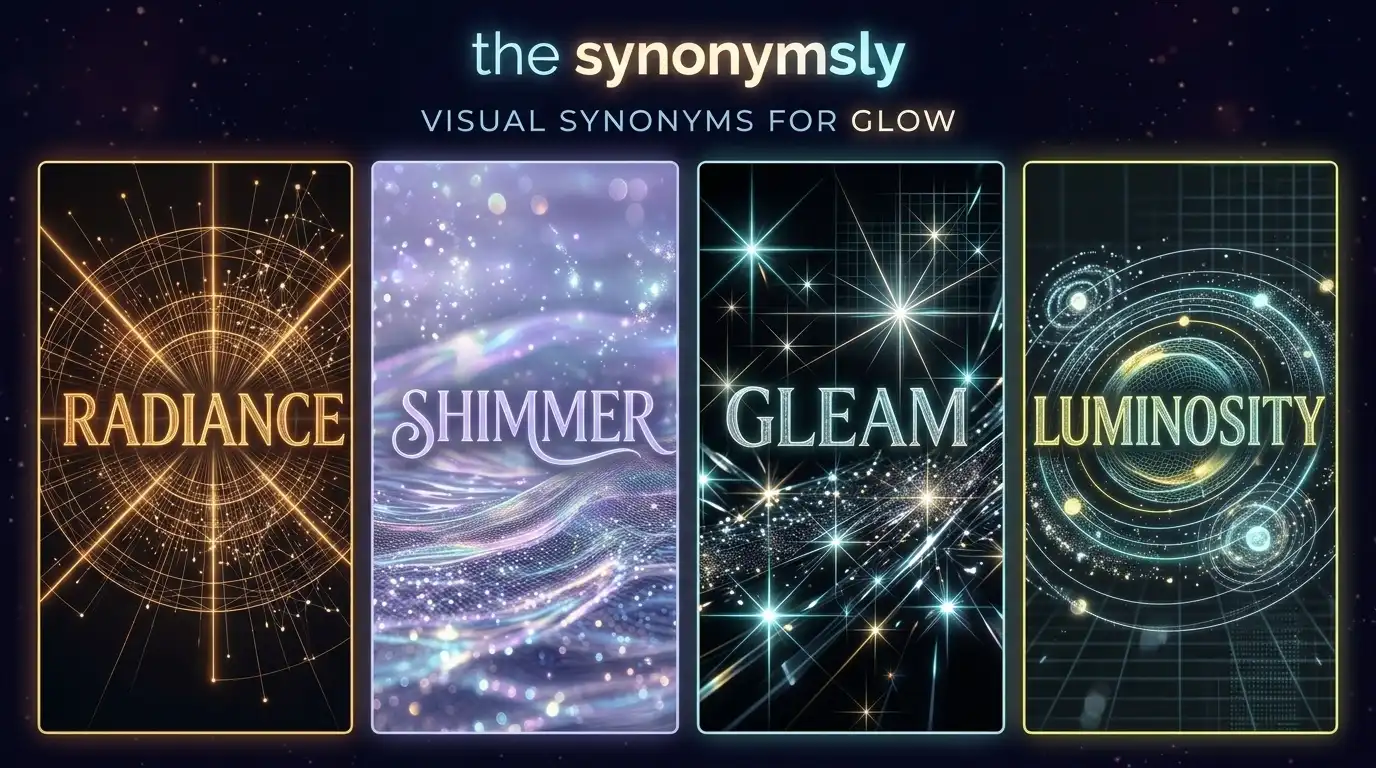
Glow means to give off soft light or show a warm, bright look.
A Word in Everyday Life
Imagine seeing a candle shine softly in a dark room. You might say that the candle has a gentle glow. You can also use this word to describe a person’s bright face after a happy day or a warm feeling of pride. The phrase glow synonyms includes words that can describe light, beauty, warmth, and joy. Some alternatives, such as shine and gleam, work well for light. Others, such as radiant and beam, are better for people and feelings. This guide will help you choose the right word for each situation.
Understanding Glow Synonyms
Simple meaning: Glow means to give off a soft, steady light. It can also describe a warm and healthy look or a happy feeling.
Part of speech: Glow can be used as a noun or a verb.
- As a noun: It means a soft light or a warm look.
- As a verb: It means to shine softly or look bright and happy.
Example in context: The lamp gave a soft glow to the room.
Best Alternatives to Glow Synonyms
| Alternative | Simple meaning | Best use |
| Shine | To give off or reflect light | Everyday speech |
| Gleam | To shine with a soft or clear light | Describing clean or bright things |
| Radiance | A bright, warm light | Descriptive writing |
| Brightness | The quality of giving or showing light | Simple descriptions |
| Shimmer | To shine with a soft, moving light | Water, stars, and fabric |
| Sparkle | To shine with small flashes of light | Jewelry and eyes |
| Glimmer | To shine faintly | Weak light in a dark place |
| Beam | To smile with great happiness | Describing people |
| Radiate | To send out light or warmth | Light, heat, and feelings |
| Blush | To become red in the face | A person’s cheeks |
Synonyms of Glow by Situation

Words for Soft and Gentle Light
Use these words when you want to describe a light that is soft, warm, or not too strong. They work well for lamps, candles, stars, and other sources of light.
Gleam — A soft or clear light that shines from a surface.
Example: A small gleam came from the silver ring.
Glimmer — A weak light that is just easy to see.
Example: We saw a glimmer of light through the window.
Shimmer — A soft light that seems to move or change.
Example: The lake began to shimmer in the morning sun.
Glimmering — Giving off a faint or soft light.
Example: A glimmering star appeared in the night sky.
Gleaming — Shining clearly, often because something is clean or bright.
Example: The polished floor was gleaming.
Flicker — To shine with a light that keeps getting brighter and weaker.
Example: The candle began to flicker in the wind.
Twinkle — To shine with small, quick flashes of light.
Example: The stars twinkle above the quiet town.
Glint — A quick, small flash of light.
Example: A glint of sunlight flashed from the glass.
Lustre — A soft shine on a surface.
Example: The old wooden table had a lovely lustre.
Words for Bright and Strong Light
These alternatives are useful when the light is clear, strong, or easy to notice. They can describe the sun, a lamp, a fire, or a bright room.
Shine — To give off or reflect light.
Example: The sun will shine after the rain.
Radiate — To send out light, heat, or energy.
Example: The heater began to radiate warmth.
Brighten — To make something lighter or more full of light.
Example: Open the curtains to brighten the room.
Illuminate — To light up a place or object.
Example: Street lamps illuminate the road at night.
Light up — To become bright or make something bright.
Example: The lights light up the garden.
Sparkle — To shine with many small flashes of light.
Example: The diamond began to sparkle in the sunlight.
Brilliance — A strong and clear brightness.
Example: The brilliance of the full moon filled the sky.
Radiance — A bright and warm light.
Example: The radiance of the morning sun spread across the fields.
Blaze — To burn or shine with a very strong light.
Example: The fire began to blaze in the cold night.
Words for a Healthy or Beautiful Look
Glow can describe a person’s face when they look fresh, healthy, or full of life. These words are useful in everyday talk, stories, and descriptions of appearance.
Radiant — Looking bright, healthy, and full of life.
Example: She looked radiant on her wedding day.
Rosy — Having a healthy pink or red color.
Example: His cheeks looked rosy after the walk.
Bloom — To become fresh, healthy, or full of beauty.
Example: Her face seemed to bloom after a good night’s sleep.
Flush — A warm red color that appears on the skin.
Example: A light flush appeared on her cheeks.
Blush — To become red in the face, often from shyness or strong feelings.
Example: She began to blush when her teacher praised her.
Fresh — Looking clean, healthy, and full of energy.
Example: He looked fresh after a short rest.
Lively — Looking full of life and energy.
Example: Her eyes looked lively and bright.
Healthy-looking — Having an appearance that suggests good health.
Example: The child had a healthy-looking face.
Words for Happiness, Pride, and Warm Feelings
Glow can also describe the happy look on someone’s face or a warm feeling inside. These words help show joy, pride, and excitement.
Beam — To smile in a way that shows great happiness.
Example: The child beamed when he opened his gift.
Radiate happiness — To show happiness through your face or actions.
Example: The bride seemed to radiate happiness.
Shine with joy — To show strong happiness.
Example: Her face shone with joy when she saw her family.
Light up — To look suddenly happy or excited.
Example: His face lit up when his friends arrived.
Beam with pride — To show that you feel very proud.
Example: The father beamed with pride at the school event.
Warmth — A kind or happy feeling that makes people feel good.
Example: Her smile brought warmth to the room.
Delight — A strong feeling of happiness or pleasure.
Example: His eyes showed delight when he saw the surprise.
Joy — A feeling of great happiness.
Example: The news filled her heart with joy.
Words Similar to Glow Synonyms but with Different Meanings
Some words are close to glow, but they do not always mean the same thing. Knowing the difference will help you use them well.
Shine vs. Glow
Shine: To give off or reflect light. It can describe strong or clear light.
Difference: Glow often suggests soft, steady light. Shine can describe a stronger or more direct light.
Example: The candle glowed softly, while the sun shone brightly.
Sparkle vs. Glow
Sparkle: To shine with small, bright flashes.
Difference: Sparkle often means light that flashes or seems to move. Glow usually means a soft and steady light.
Example: The stars sparkled in the sky, while the moon gave a gentle glow.
Blush vs. Glow
Blush: To become red in the face, often because of shyness or strong feelings.
Difference: A glow can make a person look healthy or happy. A blush is a change in the color of the skin.
Example: She had a healthy glow, but her cheeks blushed when she felt shy.
Blaze vs. Glow
Blaze: To burn or shine with a very strong light.
Difference: Blaze is much stronger than glow. Use it for a large fire or a very bright light.
Example: The fire blazed in the fireplace instead of giving off a soft glow.
Illuminate vs. Glow
Illuminate: To light up a place or object.
Difference: Glow describes giving off soft light. Illuminate usually describes the act of lighting something.
Example: The lamp glowed on the table and illuminated the whole room.
How to Choose the Right Synonym
The best alternative depends on what you want to describe. Here are some examples that show how the meaning changes.
Original: The candle had a soft glow.
Option 1: The candle gave a gentle gleam.
Option 2: The candle flickered in the dark.
What changes: Gleam describes the light, while flickered describes how it moves.
Original: The stars began to glow.
Option 1: The stars began to sparkle.
Option 2: The stars began to twinkle.
What changes: Sparkle suggests small flashes, while twinkle suggests quick changes in light.
Original: Her face had a lovely glow.
Option 1: Her face looked radiant.
Option 2: Her cheeks looked rosy.
What changes: Radiant describes a bright, healthy look, while rosy focuses on skin color.
Original: He began to glow with pride.
Option 1: He beamed with pride.
Option 2: He smiled with joy.
What changes: Beamed shows a big, happy smile, while smiled with joy focuses on his happiness.
Original: The room had a warm glow.
Option 1: The room had a gentle brightness.
Option 2: The room was filled with soft light.
What changes: The first option names the quality of the light, while the second gives a simple description of it.
Original: The sun’s glow filled the garden.
Option 1: The sun’s radiance filled the garden.
Option 2: Sunlight brightened the garden.
What changes: Radiance describes the bright light, while brightened explains what the sunlight did.

Common Mistakes When Using Glow Synonyms
Choosing a similar word can change the meaning of a sentence. Avoid these common mistakes.
Using Sparkle for Every Type of Light
Unsuitable: The room had a soft sparkle from the lamp.
Problem: Sparkle often suggests small flashes of light. It may not fit a steady lamp.
Better: The room had a soft glow from the lamp.
Using Blaze for a Small Light
Unsuitable: A small candle gave a strong blaze.
Problem: Blaze suggests a very strong light or fire. It is too strong for a small, gentle candle light.
Better: A small candle gave a gentle glow.
Confusing Glow with Blush
Unsuitable: Her cheeks glowed red because she felt shy.
Problem: Blush is a better word when someone’s cheeks turn red because of shyness.
Better: Her cheeks blushed because she felt shy.
Using Illuminate Without an Object
Unsuitable: The candle illuminated softly.
Problem: Illuminate usually means to light up a place or object. The sentence needs a clear object.
Better: The candle glowed softly.
Or: The candle illuminated the room.
Using Radiant for a Light Source Without Care
Unsuitable: The lamp was radiant softly.
Problem: Radiant is usually an adjective. It does not fit after was in this sentence with softly.
Better: The lamp gave off a soft, radiant light.
Repeating the Same Word Too Often
Unsuitable: The stars had a glow. The moon had a glow. The room had a glow.
Problem: Repeating the same word makes the writing less interesting.
Better: The stars twinkled. The moon shone brightly. The room had a warm light.
Tips for Using Glow Alternatives Naturally
- Think about the light: Use gleam for a soft shine, sparkle for small flashes, and blaze for strong light.
- Describe people with care: Use radiant for a bright, healthy look and rosy for pink or red cheeks.
- Show feelings clearly: Use beam when someone has a big, happy smile.
- Check the strength: A candle may glow, but a large fire may blaze.
- Use the right form: Glow can be a noun or a verb. Radiant is an adjective, and radiance is a noun.
- Avoid repeating words: Instead of writing, “The lamp had a glow,” try, “The lamp gave off a soft light.”
- Choose words that fit the sentence: For example, change “Her face had a glow” to “Her face looked radiant” when you want to describe her appearance.
Frequently Asked Questions
What does glow mean?
Glow means to give off soft, steady light. It can also describe a person’s healthy look or a happy feeling.
What is the closest synonym for glow?
Shine is a close alternative when talking about light. For a soft light, gleam or radiance may fit better.
What is a simple word for glow?
Shine is a simple word that often works in place of glow. For a person’s happy face, beam may be a better choice.
Can glow and its synonyms be used in the same way?
Not always. Shine, sparkle, blush, and beam have different uses, so choose the word that matches your meaning.
Final Takeaway
Choosing the right word can make your writing clearer and more lively. Some alternatives describe soft light, while others show a healthy face or a happy feeling. The best choice depends on the sentence and the meaning you want to share. When learning glow synonyms, start with simple words such as shine, gleam, and radiant. Pick two or three new words and practice using each one in your own sentences.

Emily Carter is the editor and lead writer at The Synonymsly. With a background in English language and editorial writing, she has spent the past seven years helping students, writers and professionals find exactly the right word. Emily creates clear, practical synonym guides with real example sentences, carefully checking meaning, tone and usage so readers can expand their vocabulary with confidence. Away from her desk, she enjoys reading classic novels and collecting interesting words she hears in everyday conversation.